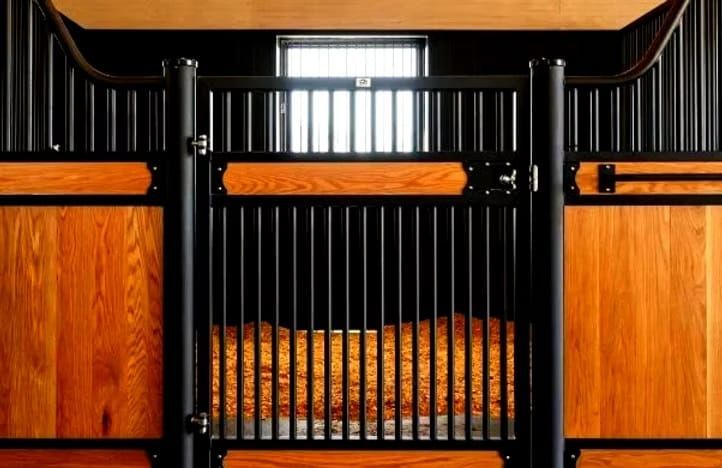
Interiors Built for Daily Stable Demands
Custom Stall Systems & Barn Components in Raleigh for private barns and commercial equestrian facilities requiring durable dividers and fronts that withstand constant use
Stall fronts and dividers in active barns endure daily contact from horses kicking, chewing, and leaning against vertical bars, and poorly constructed systems show damage within months through bent bars, failed welds, or corroded fasteners. Custom stall systems from Barrier Fencing Supply Company use heavy-gauge steel or powder-coated aluminum construction designed to handle repeated impact without warping or creating sharp edges that injure horses. Ventilation features built into front panel designs improve airflow throughout the barn, reducing respiratory irritation common in facilities with solid partitions that trap dust and moisture.
Customization options include adjustable door widths, swing gate configurations, sliding grille panels, and feed opening placements that accommodate different barn layouts and management styles. Heavy-gauge materials resist deformation even when horses push against bars during feeding, and powder-coated finishes prevent rust formation in humid stable environments where untreated metal deteriorates quickly.
Request a custom design consultation to review barn dimensions, stall counts, and ventilation requirements before ordering components.
What You Notice Once Stalls Are Installed
Custom stall systems are engineered with vertical bar spacing that prevents horses from catching hooves or injuring legs while still providing clear sightlines between stalls. Welded joints eliminate the weak points created by bolted connections that loosen over time, and grille doors swing smoothly on hinges rated for continuous use without sagging or binding. Powder coating applied to aluminum and steel surfaces resists chipping even when struck, maintaining a professional appearance throughout years of daily use.
After installation, you'll see improved air circulation as ventilation openings allow air to move freely between stalls without creating drafts that disturb bedding. Horses remain visible to handlers and other animals, reducing isolation stress common in facilities with solid partitions. Structural components stay square and secure even in high-use boarding operations where doors open and close dozens of times daily, and finishes remain intact despite exposure to ammonia vapors and moisture present in all stable environments.
Stall fronts can be configured with yoke openings for feeding, drop-down grilles that convert stalls into wash areas, or full-height partitions for stallions requiring visual separation. Barrier Fencing Supply Company manufactures components to fit existing barn dimensions or provides complete system designs for new construction projects.
Common Questions About Stall Systems
Barn owners and facility managers across the Eastern Seaboard typically ask about material durability, ventilation benefits, and customization limits before investing in stall infrastructure.
What construction material works best for stall fronts?
Heavy-gauge steel provides maximum impact resistance for facilities housing large horses or stallions with aggressive behaviors, while powder-coated aluminum offers comparable strength at reduced weight for barns where handlers frequently reposition components or need easier installation.
How does ventilation design affect horse health?
Grille patterns and open bar spacing allow air to circulate continuously between stalls, reducing ammonia concentration and airborne dust that contribute to respiratory issues. Solid partitions trap moisture and odors, creating environments where bacteria and mold thrive despite regular cleaning.
Can stall systems be customized for unusual barn layouts?
Components are manufactured to specified widths, heights, and door swing directions to fit barns with angled walls, uneven ceiling heights, or non-standard stall dimensions. Custom fabrication accommodates existing structural posts, electrical conduits, and water lines without requiring barn modifications.
What makes powder-coated finishes necessary in stable environments?
Untreated steel rusts quickly when exposed to moisture and ammonia present in all barns, creating rough surfaces that injure horses and weakening structural integrity. Powder coating bonds to metal at a molecular level, resisting corrosion even in stalls with poor drainage or inadequate ventilation.
How long do custom stall systems last in commercial facilities?
Properly installed systems using heavy-gauge materials and powder-coated finishes remain structurally sound for decades even in boarding operations with constant occupancy. Hinges and latches may require replacement after years of use, but frame components and grille panels show minimal wear when fabricated from appropriate materials.
Barrier Fencing Supply Company works with barn owners, facility managers, and contractors to design stall systems that meet specific ventilation, safety, and budget requirements. Contact the design team to discuss barn dimensions and request fabrication timelines for private or commercial equestrian projects.