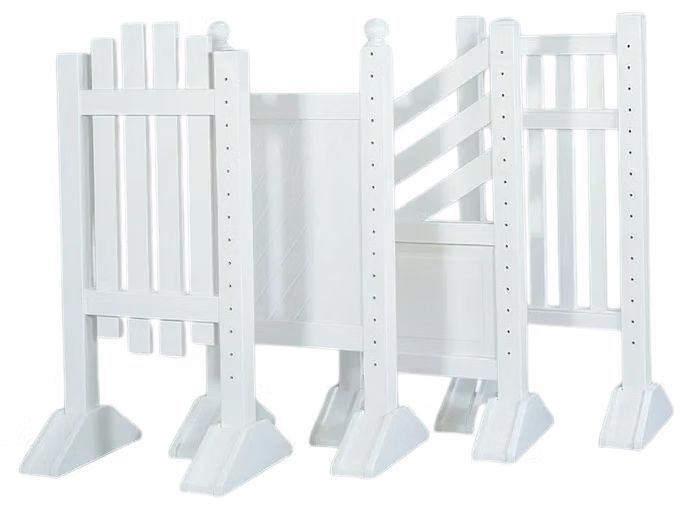
Training Equipment That Handles Outdoor Exposure
Premium Jump Standards & Arenas in Raleigh for private facilities, boarding operations, and competition venues requiring weather-resistant jumps and arena boundaries that maintain appearance through years of use
The humid climate and intense summer sun across North Carolina and South Carolina cause untreated wooden jumps to rot, splinter, and fade within seasons, forcing facilities to constantly repaint or replace standards before they become unsafe. Barrier Fencing Supply Company supplies professional-grade vinyl horse jumps and arena components manufactured from weather-resistant materials that withstand rain, UV exposure, and temperature fluctuations without deteriorating. Vinyl construction eliminates the recurring maintenance required by wooden jumps, and the material won't splinter when struck by hooves or crack during freeze-thaw cycles common in the region.
Jump standards are configured for varying skill levels, from ground poles and cross rails used in beginner training to vertical and oxer setups designed for advanced riders and competition preparation. Arena boundary systems provide visual organization that keeps horses focused during training sessions and creates defined spaces for different activities within larger facilities.
Request product recommendations and pricing to identify jump configurations and arena components suited to your facility's training programs.
What Changes After Upgrading Jump Equipment
Vinyl jumps arrive pre-assembled or in easily connected sections that reduce setup time compared to traditional wooden standards requiring drilling, painting, and reinforcement before use. Cup placements are molded into the standards at consistent intervals, preventing the hardware slippage common in wooden jumps where screws loosen after repeated adjustments. The material maintains uniform color across all components without fading into uneven patches, and surfaces clean easily with water after exposure to mud or arena dust.
After installing vinyl jumps, you'll notice equipment remains stable during use without tipping when poles are dislodged, and standards don't develop the rough surfaces and sharp edges that appear on weathered wood. Arena boundary rails stay straight and visually consistent across the perimeter, clearly defining work areas without requiring annual repainting or board replacement. Facilities using these systems spend less time repairing and refinishing equipment, allowing more focus on training and horse care.
Customizable configurations allow facilities to expand jump courses as training programs grow, and modular arena boundaries can be repositioned to accommodate different activities. Barrier Fencing Supply Company provides equipment suitable for private backyard setups, active boarding operations, and competition venues hosting regular events.
What Property Owners Usually Ask
Equestrian facility managers and private barn owners frequently ask about durability comparisons, customization options, and long-term cost savings before replacing wooden jump equipment.
Why does vinyl outperform wood for outdoor jumps?
Vinyl doesn't absorb moisture that causes wood to rot, warp, or splinter, and it resists UV degradation that fades and weakens untreated lumber. Facilities in humid regions like Raleigh see wooden jumps deteriorate within two to three years, while vinyl systems remain structurally sound and visually consistent for decades.
How are jump heights adjusted on vinyl standards?
Molded cup placements at regular intervals along each standard allow quick pole height changes without tools, and the cups hold securely without the loosening common in screw-mounted hardware. Standards accommodate poles ranging from ground level to advanced competition heights.
What arena boundary options work for multi-use facilities?
Modular rail systems create temporary divisions between dressage areas, jumping courses, and longe rings, and they can be repositioned as program needs change. Boundaries provide visual markers that help horses understand work zones without creating permanent separations that limit facility flexibility.
Can vinyl jumps handle impacts from horses and poles?
Vinyl formulations designed for equestrian use absorb impacts without cracking or shattering, and standards return to position after being struck. The material flexes slightly during contact rather than splintering like wood, reducing injury risk to horses and equipment damage.
When should facilities replace existing wooden jumps?
Jumps showing visible rot, splintering, unstable footing, or faded surfaces that create inconsistent visual cues should be replaced before they cause training disruptions or injuries. Upgrading to vinyl eliminates recurring replacement costs and maintenance labor associated with wooden equipment.
Barrier Fencing Supply Company helps equestrian facilities select jump configurations, arena components, and training equipment that match program requirements and budget constraints. Reach out to discuss specific product options and bulk pricing for facilities expanding or upgrading equipment inventories.